Showing posts with label Joanna Davidson Politano. Show all posts

Thursday, December 01, 2022

THE LOST MELODY - Joanna Davidson Politano - One Free Book

Bio: Joanna Davidson Politano is the award-winning author of Lady Jayne Disappears, A Rumored Fortune, Finding Lady Enderly, The Love Note, and A Midnight Dance. She loves tales that capture the colorful, exquisite details in ordinary lives and is eager to hear anyone’s story. She lives with her husband and their children in a house in the woods near Lake Michigan.

About the story: After the death of her father, concert pianist Vivienne Mourdant is surprised to learn she is now responsible for an adult ward at Hurstwell Asylum whom she knows nothing about. The woman’s portrait stirs old memories from Vivienne’s childhood dreams. When the asylum claims that the woman was never a patient there, Vivienne resolves to find the woman no matter what.
As she becomes an aid and is soon admitted against her will to Hurstwell, a place forgotten by the outside world, the edges of sanity and madness blur, leaving her unsure of what is real. Music plays for her ears alone, letters full of rose petals are delivered, and secrets beyond the ones she seeks are revealed. Will the woman’s history ever be revealed?

Fan-favorite Joanna Davidson Politano casts a delightful spell with this lyrical look into the nature of women’s independence and artistic expression during the Victorian era—and now.
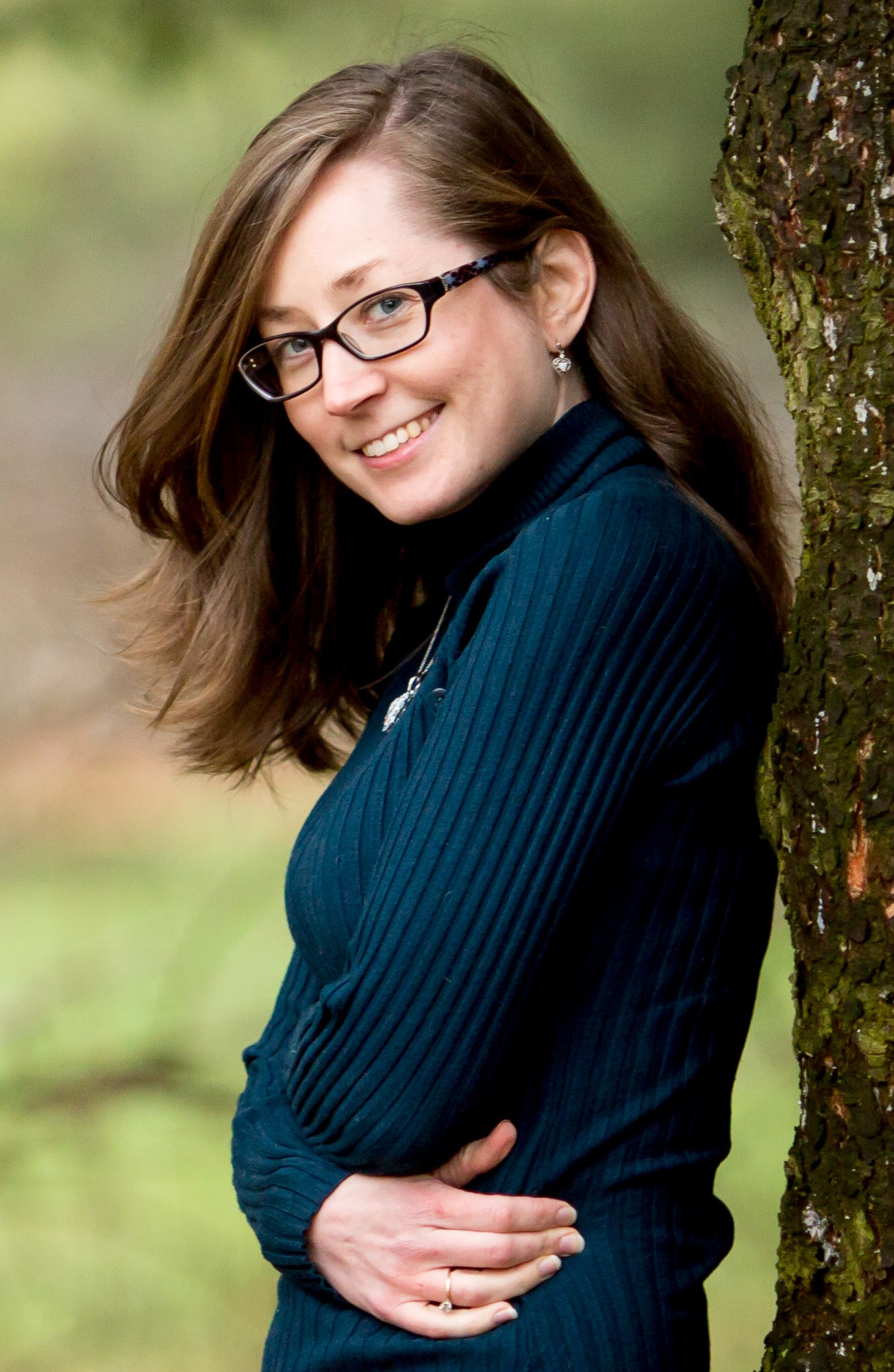
Welcome back, Joanna. Can you please provide a brief summary of your novel The Lost Melody?

The Lost Melody is about a concert pianist who sees the entire world in terms of music. She sees the people around her, the good and bad circumstances of her life, even the atmosphere of a place, as a song with all its unique traits. She enters Hurstwell Pauper Lunatic Asylum as an aid to find a mysterious ward she never knew about—and who the asylum claims was never a patient there. Because her father has paid for this woman’s keep for many years, and because Vivienne herself recognizes the woman’s portrait, she cannot keep from searching out the truth. She’s seen this woman and heard the haunting lost melody she plays on the piano, yet no one seems to know her or what became of her. She discovers more than she ever imagined she would, pairing her skill in music with a place deeply in need of healing, and we get to see through Vivienne what impact music has on people’s minds and bodies—and what impact light has in darkness.

What inspired the story of a woman searching for a mysteriously missing patient? I had a dream once—that’s how so many story ideas start—that I woke up in some prison cell for speaking out about God. It was terrifying and emboldening, and I felt I had a mission, even within these odd circumstances. In the morning, I wrote out the details of what I’d experienced, then I started asking “what if?” I made it a story idea, and thought about why someone might find themselves trapped in an asylum. I tossed out the overdone ideas and thought of more. What put her there? What happens next? Then what? And since this came from a dream, I thought it would be a fun twist to have the mysterious character the heroine searches for be from a dream too. A pianist who played a distinctive song in the middle of the night, and only the heroine heard it. I had no idea where I was going with the idea, but it was an interesting place to start!

The Lost Melody is set in the Victorian era. What drew you to this time period? Of all the books I’ve read, some of my favorites were written during the Victorian era. I feel at home in that slice of history, and I just love the nuances and climate of the time. Things were vastly different then, especially for the poor and for women, but humanity remains the same. There are so many insights into our life here and now through the lens of Victorian England.

Your character spends a great deal of time at an asylum. What type of research was required to accurately portray this time period and the location? I read a lot of nonfiction material concerning asylums, including myth-busting statistics and evidence. I also read journalist Nelly Bly’s account of her time in a “mad house,” as she called it, and everything she experienced. Her story took place in New York, so I mostly used her impressions and thoughts rather than the historical details that wouldn’t have necessarily matched British asylums, but it was incredibly helpful in setting the tone in my head.

What I found most helpful were the journals written by various asylum inmates, mostly men, in Victorian England. Those accounts were raw and heartbreaking, especially when I recognized everyday conditions in the patients described in the pages. There were also records of items patients left behind as well as early photographs of their faces, and that added a human element to my research. I couldn’t set these stories aside. I couldn’t forget about the people and their lives. And through all this research, I found a great deal of hope and beauty.

Your main character, Vivienne, is a concert pianist. What compelled you to write about a musically talented character? When God invited me into a very dark-sounding premise, this asylum setting, I wanted to contrast it with something intensely beautiful. One of the most beautiful things I could think of within that time period was music—especially piano music. Whenever I write, or even when I’m homeschooling my small children, piano music permeates the atmosphere and somehow grounds us all. It’s calming but also full of life, and that’s exactly what I wanted to put into this story that could otherwise be quite dreary. The music ended up becoming a huge component of the story, and adding so much light and hope and fascinating historical elements that I can’t wait to share with readers. The music portion of my research and my preparation was a real delight to my music-loving heart.

There is an element of psychological suspense in The Lost Melody. Do you find it challenging to add in this type of suspense? Very much so! I always start out knowing the ending of my stories—but then discover I’m wrong at some point in the drafting stage. I add twists and change outcomes all the time, and it feels like I’m uncovering more layers than I even include in the finished novel. So as I’m writing these stories, even the simple plot twists, they really mess with my brain. All the possibilities, the what-ifs, the impossible scenarios, the dots that suddenly connect . . . they just dance around in my head, twisting this way and that until suddenly all the pieces are in place and there’s an entire story laid out.

Honestly, I never think the story will work itself out, or that a resolution will be possible, until it happens and it’s there. A writing friend once told me that our brain hates an unfinished story, and that’s how this one especially went for me—I couldn’t get it out of my head until I’d untangled every last twist and saw everything clearly. Then, of course, there’s the matter of going back through the whole thing and making sure all the details add up and actually point to the right conclusion!

Do you identify with Vivienne in any way?

Absolutely. I’ve played piano for as long as I can remember, and the way music gets under her skin—in a good way—is somewhat from my own life. I’m not a performer, but I absolutely love to play and listen to music. Beyond that, I felt her spiritual struggle heavily. The idea of having a strong purpose in life, then being derailed, finding yourself trapped in circumstances that were nowhere near what you’d planned . . . and realizing the interruption was as important as the previous mission you were on. Perhaps more so. I’ve been in some long seasons I didn’t understand, didn’t like, and after crying out to God with all my questions and probably more than a few complaints, I realized each time what freedom I still had within the prison of those circumstances.

What do you hope the reader takes away from The Lost Melody? A sense of freedom within the constraints of circumstances. At some point we all find ourselves mired in a place we don’t want to be, trapped by someone else’s choices or by unforeseen events. We fight it, complain about it, then something happens and we settle into the season and maybe even realize this interruption was the point all along. That our purpose and mission are found right in the midst of the place we never wanted to be. Or at the very least, that we can have a great deal of freedom within that difficulty. What freedom is available to God’s people, especially within their heart, no matter what’s going on around them.

What do you love about writing historical fiction? I love the characters! I always start with them. Then I look at what’s going on in the world around them and how that might shape who they are, their motivations, their heart questions. Humanity remains largely the same over time, broken but beautiful, but there’s something irresistible about stepping out of your own world and visiting another, spending time with the people there and seeing humans from their perspective—then seeing the similarities to ourselves in modern culture.

Where can our audience go to connect with you? My newsletter is where I share everything first, and you can connect with that on my website: jdpstories.com. I’m also on Facebook and Instagram as Joanna Davidson Politano. I also create Pinterest boards to help readers visualize my stories.

Thank you, Joanna, for sharing your novel on my blog. I have a lot of readers who love historical novels.

Readers, here’s a link to the book.

https://www.amazon.com/Lost-Melody-Joanna-Davidson-Politano/dp/0800736915/ref=tmm_pap_swatch_0?_encoding=UTF8&qid=1669912756&sr=1-1

Leave a comment for a chance to win a free copy of the book. You must follow these instructions to be in the drawing. Please tell us where you live, at least the state or territory or country if outside North America. (Comments containing links may be subject to removal by blog owner.)

Void where prohibited; the odds of winning depend on the number of entrants. Entering the giveaway is considered a confirmation of eligibility on behalf of the enterer in accord with these rules and any pertaining local/federal/international laws.

The only notification you’ll receive is the winner post on this blog. So be sure to check back a week from Saturday to see if you won. You will have 2 weeks from the posting of the winners to claim your book.

If you’re reading this on Goodreads, Feedblitz, Facebook, Twitter, Linkedin, or Amazon, please come to the blog to leave your comment if you want to be included in the drawing. Here’s a link: Http://lenanelsondooley.blogspot.com 

Monday, November 27, 2017

LADY JANE DISAPPEARS - Joanna Davidson Politano - One Free Book

Dear Readers, I love introducing you to books that catch my fancy. Lady Jane Disappears is just such a book. I personally am not fond of novels written in first person, but this one grabbed me from the first page. The storyline is unique, and the characters three-dimensional. The plot twists often surprised me, and the storyline kept me turning pages. I know you’ll like this story.

Bio: Joanna Davidson Politano freelances for a small nonfiction publisher but spends much of her time spinning tales that capture the colorful, exquisite details in ordinary lives. Her manuscript for Lady Jayne Disappears was a finalist for several contests, including the 2016 Genesis Award from ACFW, and won the OCW Cascade Award and the Maggie Award for Excellence. She is always on the hunt for random acts of kindness, people willing to share their deepest secrets with a stranger, and hidden stashes of sweets. She lives with her husband and their two babies in a house in the woods near Lake Michigan and shares stories that move her at www.jdpstories.com.

Welcome, Joanna. Tell us a little about Lady Jayne Disappears.
This book is the result of asking, “What if an overlooked girl happened to secretly write her family into novels and publish them under a pen name?” Aurelie Harcourt has always created stories, and it’s the way she handles life in a home where she does not belong. She is writing the story of her mother, Lady Jayne, and the family that knew her before she disappeared. Aurelie begins digging into secrets and long-ago love stories to understand the people around her, but more than that, to discover what happened to the mother she’s never met.

Here’s more about the story.
Author Joanna Davidson Politano’s engaging novel, Lady Jayne Disappears, will delight readers with its highly original plot, lush setting, vibrant characters, and reluctant romance.

When Aurelie Harcourt’s father dies in debtor’s prison, he leaves her with just two things: his famous pen name, Nathaniel Droll, and his wealthy family, who want very little to do with her.

As Aurelie struggles to adjust to her father’s family and learn the rules of society, she relishes in his parting gift—the beginning of his last story. The story she always wanted to hear about her mother’s mysterious disappearance from the home where she now lives. To complete the novel, she must keep her identity as Nathaniel Droll hidden while searching for clues from her relatives and one enigmatic houseguest.  Lynhurst Manor is a house built on secrets. Can the arrival of Aurelie Harcourt reveal them all?

Why did you decide to write about serial fiction? Why do you think it had such a great appeal?
Serial fiction resembles those addictive television shows we all anxiously await each week and then discuss passionately with friends. We become attached to characters and eagerly follow their struggles and victories to a grand conclusion, and working-class Victorians felt the same way about their serialized novels. Writing about serial fiction allowed me to delve into a charmingly vintage world while also presenting attitudes and circumstances that resemble our modern world, making the story relatable and relevant to our modern faith walks.

How did you develop the setting of the story? Did you visit a mansion that inspired you?
Big old houses are like characters to me. Each has a distinct personality and backstory just waiting for someone to unravel and understand. I’ve toured, stayed in, and climbed among the ruins of old houses throughout Great Britain, and many of my story ideas come from some unique aspect of a house I saw. I’m deeply fascinated with the people who have resided in these places, and their stories are so full of shadows and interesting corners with dark hallways just beyond. Lynhurst is based on a few different country houses I saw, but most of the layout and character are taken from Tyntesfield in Somerset. It’s a lovely old house with a wealth of stories.

What was the most interesting thing you learned while doing research for this book?
Debtor’s prison fascinates me. Charles Dickens spent time there when his father was a debtor, and his experiences made it into several of his books. It’s such an odd system, jailing people and keeping them from working until they can pay a debt, and my heart just ached for some of the individual stories I read of debtors. The place was run as a business, designed to scrape up anything of value the prisoners had or acquired from visiting relatives, and that still baffles me.

I’m also enchanted by the idea of pen names, which is an element of my heroine’s story. The Brontë sisters were famous for using them, and I loved the image of them revealing themselves to their publisher in person, as my heroine does in the opening of this novel. There’s also something so captivating to me about a seemingly nondescript person having a sort of secret super power.

Do you relate to Aurelie in any way? Did you have real people that inspired your characters?
Oh yes! Aurelie’s writer heart mirrors my own in so many ways. It was easy to create her struggles through writing and everything that hinders it, because they are problems I’ve walked through countless times. Stories have been a part of my heart and a lens for viewing the world as long as I can remember, just like Aurelie. Her inability to overlook hurting people, her desire to help, and her love of beautiful words are all pages torn out of my own life story. The most similar aspect of her nature, however, is the daughter-heart that looks up to her father as larger than life, painting over all his flaws and embracing him and everything he values. My father is a storyteller and book lover like Aurelie’s, and although he does not struggle with the vices that gripped Aurelie’s father, he has cultivated a strong father-daughter bond with me. It was easy to wring her heart when it came to her father, because mine is just as dear to me as hers is to her.

What lesson(s) do you hope readers will take away from reading your book?
There is one lesson my own heart has had a hard time learning over the years, and it’s the one Aurelie struggles with—if the world fits, you’re the wrong size. Just as Aurelie tries in vain to become a part of her wealthy socialite family, most of us have experienced the desire to belong somewhere, even if it was as unhealthy and broken as Aurelie’s family.

There’s a book I found in college that impacted me on this topic, and years later the truths from it remain with me. It convinced me that if we sometimes didn’t fit in to our earthly surroundings, that was all right. In fact, it was a sign we were doing things well. We all know this world is broken and sinful and messy, so why should we strive to fit into it? The more we resemble Christ, the more we feel at odds in this world. God designed us for a completely different environment that was ruined by sin, and now nothing will ever quite feel right until we’re reunited with God and saturated in his presence for eternity.

In what way would you say your faith is worked into the book?
As I wrote the book, I wrestled with how comfortable I should be in this world. Was it okay to be bothered by certain things, to be rejected by certain people? Should I seek to be content with what was in reach, or was a certain amount of discontent healthy? As my writer mind walked through this story with Aurelie, my Jesus-seeking spirit was working on realigning my motives and efforts with a larger focus than the here-and-now.

I began to appreciate and even embrace some of the countercultural parts of my personality and thinking as I reminded myself that Jesus was the most countercultural thinker ever! Jesus’s answers on success, wealth, priorities, and the value of certain people turned his listeners’ expectations upside down. The biggest one for me is that last one—the value of people. Why does the world automatically write off certain people? The elderly. The introverted. The homeless. Those who messed up in some way.

I’m infinitely content to be countercultural in this respect, and it’s been a passion of mine to reveal hidden value in the people the world so easily sidelines. I bring that into the book through Aurelie—not only does she see value in the debtors but she herself is written off by her own family and comes to understand how Christ values her.

What are you working on next?
My next story takes place in an English vineyard that holds a delightful secret. It features an artist whose only canvas is her room, from furniture to ceiling. Painting is her escape from a competitive search for her family’s fortune, which her father hid before his sudden death. The love story includes little nuggets of my own story, which was a joy to write.

How can readers connect with you?
Readers will find a glimpse of my writer heart and my passions on my website, http://www.jdpstories.com .


For visual portrayals of my book concepts, find me on Pinterest at https://www.pinterest.com/sunshine39n/ .

Thank you so much, Julianna, for allowing me to share this unique story with my blog readers. I know they’ll be as eager to read the book as I was.

Readers, here are links to the book.
Lady Jayne Disappears - Christianbook.com
Lady Jayne Disappears - Amazon paperback
Lady Jayne Disappears - Kindle
Lady Jayne Disappears - Audiobook

Leave a comment for a chance to win a free copy of the book. You must follow these instructions to be in the drawing. Please tell us where you live, at least the state or territory or country if outside North America. (Comments containing links may be subject to removal by blog owner.)

Void where prohibited; the odds of winning depend on the number of entrants. Entering the giveaway is considered a confirmation of eligibility on behalf of the enterer in accord with these rules and any pertaining local/federal/international laws.

The only notification you’ll receive is the winner post on this blog. So be sure to check back a week from Saturday to see if you won. You will have 4 weeks from the posting of the winners to claim your book.

If you’re reading this on Goodreads, Google+, Feedblitz, Facebook, Twitter, Linkedin, or Amazon, please come to the blog to leave your comment if you want to be included in the drawing. Here’s a link: