
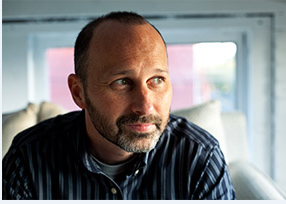
Marcus Brotherton is the New York Times, USA Today, Publishers Weekly, and Wall Street Journal bestselling author or coauthor of more than twenty-five books that have been called “fascinating,” “brilliantly arranged,” “magical,” and “refreshingly frank.”
Tosca Lee is the New York
Times bestselling author of twelve novels, including The Line Between,
The Progeny, The Legend of Sheba, and Iscariot. Lee’s work
has been praised as “deeply human,” “powerful,” and “mind-bending historical
fiction.”
New
York Times
bestselling authors Marcus Brotherton and Tosca Lee have partnered on a heart-gripping
novel inspired by true stories. Based on the lives of three friends, The
Long March Home chronicles the friends’ journey from Alabama to the
Philippines during World War II, covering not only the lives and love they left
behind but also the impossible odds they face as they struggle to survive what
has become known as the Bataan Death March.
The Long March Home is a riveting coming-of-age tale of friendship, courage, sacrifice, and love as three friends struggle to survive unthinkable odds.
Can you please provide a brief summary of your novel, The Long March Home? Inspired by true stories, The Long March Home is a gripping coming-of-age tale of friendship, sacrifice, and the power of unrelenting hope.

Life in the Philippines seems like paradise—until the morning of December 8, 1941, when news comes from Manila: Imperial Japan has bombed Pearl Harbor. Within hours, the teenage friends are plunged into war as enemy warplanes attack Luzon, beginning a battle for control of the Pacific theater that will culminate with a last stand on the Bataan Peninsula and end with the largest surrender of American troops in history.
What follows will become known as one of the worst atrocities in modern warfare: the Bataan Death March. With no hope of rescue, the three friends vow to make it back home together. But the ordeal is only the beginning of their nearly four-year fight to survive.
The Long March Home is set against the backdrop of the Bataan
Peninsula in the Philippines. When did you first learn about the Bataan Death
March, and why did you decide to write a novel about this era?
MARCUS: It all started about fifteen years
ago when Lt. Buck Compton and I were waiting for a plane during a speaking
tour. Buck—who’d been a commissioned officer with the legendary Band of
Brothers—was talking to me about World War II, and I remarked about the
difficulty he’d experienced during the wintry siege of Bastogne.
Buck agreed, then said, “Yeah, but at least
I wasn’t fighting in the Pacific. Man, those guys had it really rough.”
That line stayed with me for years.
I began to read up extensively on the era.
In 2013, historian Adam Makos and I interviewed veterans who’d fought in the
Pacific for our bestselling oral history project, Voices of the Pacific. I grasped more fully what Buck was hinting
at then. But I hoped to do more.
When it came to this era, I wanted to take
readers right into the action and pathos and connect with not only nonfiction
readers but fiction readers too, which ultimately led to the creation of The Long March Home.
TOSCA:
Honestly—and this was one big reason I wanted to do this book—I had not heard
about the Defenders of Bataan or this harrowing chapter in World War II history
until Marcus approached me with the idea of working together on this project.
What a sobering
education researching this story has been and what an honor it is to share it
with others who, like me, may not be aware of it or its heroes.
The Long March Home is the story of three friends, Jimmy “Propper” Propfield, Billy Crockett, and Hank Wright. Can you provide some background information on each of these young men?Jimmy is our main character. He’s a good kid, a pastor’s kid, a kid who always tries to do the right thing. He and Claire, Billy’s older sister, have been companions practically since birth, as their mothers are best friends.
Billy, who is a couple years younger than
Jimmy, is the happy-go-lucky sidekick.
Hank, the oldest of the boys, is a natural
leader, a bad boy, and the kind of kid others want to be around. The only
problem is, Hank’s had a soft spot for Claire since meeting her in third grade
. . . and Claire is the only girl Jimmy’s ever loved.
Jimmy, Billy, and Hank all make sacrifices at different times in order to help each other and in an effort to survive the war. Without giving away any spoilers, can you mention some of the sacrifices they have to make? The entire story is about sacrifice on many levels. For Jimmy, it’s the sacrifice of a dream future that doesn’t seem meant to be. For Billy, it’s the sacrifice of what could have been a college career as a track star. For Hank, it’s about claiming—and laying down—his own chance to shine after living so long in the spotlight of his older brother, Cowboy. For all three of them, it’s about doing whatever it takes to keep their friends alive.
At one point, there is a big misunderstanding between Jimmy and Hank that nearly destroys their friendship. What event(s) help mend their relationship? Ultimately, the willingness of one of them to set aside pride and old wounds is what brings them back together in the face of ongoing adversity and their uncertain survival.

From the sharing of provisions to their
familiar banter in an effort to buoy spirits during the grueling miles of the
Death March, the three friends make a constant effort to stay together and
protect one another.
At Camp O’Donnell, Jimmy is assigned a work task that strips away any pride he may have had. Can you tell readers about his duty and what lessons we can learn when we are at the lowest points in our lives? At Camp O’Donnell, Jimmy is assigned to the burial detail. His job is to dig graves in the mud for the constant stream of dead soldiers in the blistering heat. It’s a work detail few survive for long, and it makes him unsanitary to be around, especially as he’s unable to bathe or wash the stink of death or the decaying matter from himself. How he comes through that detail becomes a powerful metaphor for the need to surrender to the help of others and the kind of salvation we cannot achieve ourselves.
Jimmy and his father have a strained
relationship, which is part of the reason Jimmy chooses to join the war. Can
you provide a hint of what else leads to Jimmy’s decision? Jimmy has long been expected to follow in
his father’s footsteps. But he’s chafed for years beneath his father’s
unyielding sense of right and wrong and Jimmy’s seeming lack of freedom to
choose his own path. For Jimmy, choosing to enlist is his way out from under
his father’s oppressive presence in his life.
Religion and legalism are an underlying theme within Jimmy’s story in particular. How does Jimmy fight against legalism and in the end come to terms with his own spiritual walk? Jimmy is raised believing that life is black and white, but all of that quickly goes awry in the fog of war.
In addition to the three friends, you also introduce readers to Billy Crockett’s sister Claire, who plays a big part in The Long March Home. Please provide a hint of how her character impacts all of the friends. Claire is the voice of reason and duty, but she’s also a fun and whimsical presence in the boys’ lives—the one who forces Jimmy to learn to dance, who scolds the boys when they act out, and then who leaps into their favorite swimming hole. She’s the only girl Jimmy’s ever loved but whom Hank will do anything for. She represents home and all that is good and familiar from their childhood.
The Long March Home includes graphic depictions of war and all the grittiness and horror that come with it. What type of research was required to accurately portray the details surrounding the war? We wanted to make things as factual as possible, really immersing readers in the locations, events, and characters’ lives.
MARCUS: First, I researched and wrote two
nonfiction books about Bataan and the war in the Pacific. The first was the
oral history project Voices of the
Pacific (2013), done with historian Adam Makos. We interviewed real-life
veterans who’d fought in the Pacific. The second was a biography titled A Bright and Blinding Sun (2022) in
which I profiled the life of underage enlistee Joe Johnson. He fought on Bataan
and survived his experiences as a POW. Both of those books required extensive
research and helped create an overall awareness for me that helped with this
book.
Then, having Tosca on board was an
important piece of the research process too. She came in with a fresh set of
eyes and a heart wide open to learning about this era. I had originally started
the manuscript directly on the march, but Tosca convinced me we needed several
new chapters at the start of the book to bring the reader up to speed on who
these soldiers were, what they were doing on Bataan, and how they’d ended up
surrendered to the enemy. As usual, Tosca was right.
TOSCA: It was pure selfishness. I wanted to know
more about these characters and their lives before, what made them the friends
they were, and why they had to
survive.
Delving into the four friends’ young lives
together in Alabama and then in the Philippines as they are thrust into a
desperate, months-long war—not only against the Japanese but also against
hunger, disease, and dwindling hope of reinforcements—was fascinating to
research, nostalgic, poignant, and finally very sobering to write.
The Long March Home is a dual-time novel. Can you expand on how these two timelines intersect? The dual timeline is very important to this story. It provides the history of the four friends growing up and sets the stage for their circumstances at the time when the boys enlist in the Army. It also provides a much-needed respite for the reader from the horrors of war as the boys are engaged in fighting and later in their bid for survival as POWs.
What underlying themes can be found within The Long March Home? We answer that in two ways: Overtly, it’s a story of the power of friendship set against a backdrop of sacrifice. What would you do for the friends you love the most? Then, it also points to the complex morality of life. We often think only in black and white, right or wrong. But life hands us situations in which we are pushed far beyond our comfort zones. This book asks, would you take one life to save another?
The Long March Home is a fictional story, but it is based on true events. Can you point out some of the events that actually took place during this time? All the large-scale events, backdrops, and settings in this story are true. Clark Field was bombed within hours of the attack on Pearl Harbor, launching the Philippines into war in the Japanese bid to control the Pacific theater. The lack of supplies and the supply runs that the boys made to Port Area for food and ammunition are all documented in survivor accounts. The dysentery, malaria, and hunger portrayed in the book were widespread. The withdrawal of ships and the soldiers’ feelings of abandonment, the largest surrender of American troops in April 1942, and the subsequent horrors of the Death March and life in prison camps like O’Donnell and others mentioned in the book are all unfortunately true. The bombing of the Japanese “hell ships” is also true. Jimmy, Billy, and Hank’s experiences stealing food to survive, the terrible conditions of the train to Capas, the tortures they endured as POWs, and their work details in the Philippines and in Japan are all knit from survivor accounts. The female guerilla, Felipa Culala, who appears in our story is a real historical figure.
The Bataan Memorial Death March has been organized to commemorate the lives that were lost during that time. When did this memorial march first begin, what is involved in the march, and where does it take place? The Bataan Memorial Death March takes place at White Sands Missile Range in New Mexico—a state deeply affected by the loss of life in the Philippines during World War II. Of the approximately ten thousand lives lost on the Bataan Death March, nine thousand of them were Filipino.
Nearly ten thousand participants take part
in the memorial march every year. Next year marks the 81st
anniversary of the Bataan Death March and the 34th annual Bataan
Memorial Death March, which will take place March 19, 2023. For more
information about the march, please visit https://bataanmarch.com.
Marcus, you generally write more nonfiction
books, and Tosca is well known for her works of fiction. How did the two of you
connect to write a story about the Bataan Death March?
MARCUS: I worked on the manuscript for
about seven years before Tosca came along. It was a passion project for me, but
unfunded, so I needed to work on it in bits and pieces. The characters and the setting
were unforgettable to me, but there were several huge challenges to the project
that kept me stymied. I had the big pieces in place, but the story was so
graphic, I knew we had to intersperse the Bataan narrative with something less
violent. Also, to appeal to fiction readers, I sensed the book needed to have strong
female characters. I had the frames sketched for Claire and Filipa, but the
characters weren’t really singing until Tosca came along.
I had read several of Tosca’s novels and
loved her work. She had endorsed a different book for me at one point, and we’d
corresponded several times. So in 2016, I reached out to Tosca, explained the
story and the characters, and asked if she’d like to collaborate. She read my
outlines, character sketches, and the manuscript I had at that point and
immediately saw its potential. She did her own research to get up to speed,
then rewrote the female characters, added a new opener to the book, and helped
straighten out how the plot moved through two very different locations.
Then we went back and forth through the
manuscript multiple times together to connect all the dots and get it all into
one voice. It was a true collaborative effort, and it became just as much
Tosca’s book as mine. When it comes to fiction writing, she’s a workhorse. She
is also super smart, thinks in layers, and kept us both in good humor at
various difficult times during the project.
TOSCA: I was in the middle of a four-book
contract and finished the last two books before I took this on. I went in full
force, but then Marcus is being kind and leaving out the fact that my
creativity nose-dived during the pandemic. The year 2020 was a very stagnant one
for me writing-wise. Which is weird because if you would have posed the
scenario to me before—stuck at home during a global pandemic, travel and
in-person events suspended—I’d have thought I would’ve been working away like a
mad scientist, taking advantage of the time I normally would have been
traveling to promote my 2019 (pandemic, ironically) duology, The Line Between/A Single Light, and teaching fiction writing at
conferences around the nation.
Marcus probably thought The Long March Home had withered
away on my end more than once before things kicked back into gear for me in
2021. I’m grateful for his commitment and continued belief in this story. This
has been a labor of love and a passion project for him, and I’m very glad he
invited me to join him in that. It would be easy for a writer so invested in a
story to hold on to it with a closed fist, but he’s done just the opposite.
As an author, Marcus has so much experience
sharing inspirational stories with the world. He’s intentional around his
commitment to quality storytelling, but he’s also always up for a laugh. That’s
important in this business, I think.
What do you hope readers will gain from reading The Long March Home? An engrossing and inspiring story. Beyond that, insight into an often untaught chapter of World War II history and its heroes and an increased gratefulness for their sacrifice. Today’s generations must remember that freedom isn’t free. Past generations have given much so that we can live for what matters.
Ultimately, this book is about heroes, empathy, and
healing—all things that are needed in big supply these days.
How can readers connect with you? On our websites and on social media.
Marcus:
Website: https://marcusbrotherton.com
Facebook: https://www.facebook.com/marcus.brotherton.nw
Instagram: https://www.instagram.com/marcusbrotherton/
Goodreads: https://www.goodreads.com/author/show/92080.Marcus_Brotherton
BookBub: https://www.bookbub.com/authors/marcus-brotherton
Amazon: https://www.amazon.com/Marcus-Brotherton/e/B001JP0ZR8
Tosca:
Website: https://toscalee.com
Facebook: https://www.facebook.com/AuthorToscaLee/
Twitter: https://twitter.com/ToscaLee
Instagram: https://www.instagram.com/toscalee/
Goodreads: https://www.goodreads.com/author/show/427839.Tosca_Lee
BookBub: https://www.bookbub.com/authors/tosca-lee
Amazon: https://www.amazon.com/Tosca-Lee/e/B001JPCC42
Thank you, Marcus
and Tosca, for sharing this book with my blog readers and me. Marcus, you’re
new to me, but I’ve known Tosca for years and know how powerful her books are.
Readers, here’s a
link to the book.
Leave a comment
for a chance to win a free copy of the book. You must follow these
instructions to be in the drawing. Please tell us where you live, at least
the state or territory or country if outside North America. (Comments
containing links may be subject to removal by blog owner.)
Void where prohibited;
the odds of winning depend on the number of entrants. Entering the giveaway is
considered a confirmation of eligibility on behalf of the enterer in accord
with these rules and any pertaining local/federal/international laws.
The only
notification you’ll receive is the winner post on this blog. So be sure to
check back a week from Saturday to see if you won. You will have 2 weeks from
the posting of the winners to claim your book.
If
you’re reading this on Goodreads, Feedblitz, Facebook, Twitter, Linkedin, or
Amazon, please come to the blog to leave your comment if you want to be
included in the drawing. Here’s a link: Http://lenanelsondooley.blogspot.com



 - Amazon