When I received Ward Tanneberg's newsletter this month, I asked if I could share it with all of you. He agreed.
|
When I received Ward Tanneberg's newsletter this month, I asked if I could share it with all of you. He agreed.
|

I literally began to weep in that bookstore. Right then and there, I said, “Lord, I’m going home right now to start writing a children’s book that portrays the truth about You. The devil is not going to capture children’s minds and hearts on my watch!
So I went home and started writing Who Is Jesus?, a picture book that portrays the truth about Jesus Christ in a way that children can comprehend and relate to.
After that book, the Lord began giving me other ideas for children’s books. I have always dearly loved children and am able vividly to recall my own childhood. This helps me a great deal when I write for little ones.
It’s been said that it’s easier to write for children than it is to write for adults. You write for both, so what is your opinion? I think it’s definitely more difficult to write for children. When we write for children, we write for little people who are just like us grown-ups but less nuanced, yet, I believe, more spiritual in their life experiences. I like to say that children are “fresh from the heart of God,” with all the innocence that position implies. So when we write for children, we write on a different, and I think, more noble, level of the human heart.
One of my favorite quotes is that by Madeleine L’Engle: “You have to write the book that wants to be written. And if the book will be too difficult for grown-ups, then you write it for children.”

The most wonderful moment of my writing life came shortly after I had published my first middle-grade novel, Dixie Randolph and the Secret of Seabury Beach. On a visit to my home, my nine-year-old granddaughter pulled me aside and said, “Nonna, I really liked your book!” Her words so touched my heart and brought me to tears.
Why do you think writing for children is so important? We live in a culture today where absolute truth has been driven out. Our children are being exposed to unmentionable evil unlike anything I’ve ever witnessed in my lifetime. We are planting seeds of sin into their fragile, impressionable hearts instead of seeds of righteousness. This is nothing short of child abuse. I am often reminded of our Lord’s comment in Luke 17: 2: “It would be better to be thrown into the sea with a millstone hung around your neck than to cause one of these little ones to fall into sin.”
There are several genres of children’s books: picture books, storybooks (like picture books, but longer), chapter books, middle-grade fiction, and young adult, aka YA. Do you have a favorite? I have written in all genres except YA. I don’t know that I have a favorite. As long as I can tell an engaging story, I’m happy. Picture books, I think, are more difficult to write in that the story should not exceed 800 words. Recently, that number has even been reduced to 500 words by some publishers. So a picture book writer must tell a good story with a beginning, a middle, and an end in only a few words. This forces the writer to get down to the heart of the story—the bare bones, as it were—while still considering all the elements of good story-telling.
What advice would you give to an aspiring children’s writer? First of all, I would say that if you are not consistently around or with children, find a way to spend as much time as you can with them. Get involved in their lives. Listen to them. Mostly, listen. Ask them questions. They will share their hearts with you. Those nuggets they share will be seeds for your stories.
Observe children interacting with other children. Observe them when they are alone. Observe them when interacting with adults. You will learn a great deal about them from their body language and their facial expressions. Most of all, love them with all your heart and they will love you back. You will grow in awe of them. You will come to understand what Jesus meant when He said we must become like little children to enter the Kingdom of God.
Finally, read as many children’s books as you can, particularly in the genre you wish to write.
How much say does a children’s author have in the illustrations for his book? It depends on who publishes the book. If your story is published by a traditional publisher, you will likely have very little say in the illustrator chosen or in the illustrations. Some publishers may ask your opinion on a cover, but most do not.
If you indie-publish, then you have all the say on the illustrator you choose. Since my children’s books are indie-published, I chose all my illustrators. But once I choose the illustrator, I allow the illustrator freedom of artistic expression in the illustration process. This is my way of honoring the artistic gift God has given the illustrator. I feel comfortable giving the artist full reign on the artwork, however, because I have first chosen the illustrator and have seen his or her artistic style and am happy with it.
How does publishing a children’s book differ from publishing a book for adults? Again, it depends on whether you go with a traditional publisher or you indie-publish. Since I have indie-published my children’s books, I can tell you there is a lot of work involved. I have to hire my own professional illustrators and editors. Also, I have to have the files formatted properly, although an experienced illustrator will know how to do that. Books with illustrations require a different kind of formatting compared to simple print books. When I publish my books for adults, however, I don’t need to consider hiring illustrators, only editors. So, publishing for adults is much easier when it comes to logistics.
Do you have any more children’s books in the works? Yes, I am currently working on a children’s storybook titled Nonna Cioccolata (Italian for Grandma Chocolate.) Because I bring my grandchildren Hershey chocolate kisses when I visit them, they have taken to calling me Nonna Cioccolata. So, I decided to write a story about a character by that name.
Do you have any final words to encourage our readers? Yes. If God has called you to write for children, then consider it a great responsibility and a high honor. Children believe everything they are taught, so our responsibility as children’s authors is, I believe, more onerous than it is when writing for adults. Not that we have less responsibility when writing for adults. We don’t. But when we write for children, we are holding impressionable hearts and minds in our hands. Hearts and minds that are not yet experienced enough to be able to nuance and to discern between truth and error. So, write for children with great care, knowing that you are writing for the very heart of God.
Thank you, MaryAnn for sharing Miracle at Madville with us. I'm eager to share it with my great-grandchildren.
Readers, here’s a link to the book.
Leave a comment for a chance to win a free copy of the book. You must follow these instructions to be in the drawing. Please tell us where you live, at least the state or territory or country if outside North America. (Comments containing links may be subject to removal by blog owner.)
Void where prohibited; the odds of winning depend on the number of entrants. Entering the giveaway is considered a confirmation of eligibility on behalf of the enterer in accord with these rules and any pertaining local/federal/international laws.
The only notification you’ll receive is the winner post on this blog. So be sure to check back a week from Saturday to see if you won. You will have 2 weeks from the posting of the winners to claim your book.
If you’re reading this on Goodreads, Feedblitz, Facebook, Twitter, Linkedin, or Amazon, please come to the blog to leave your comment if you want to be included in the drawing. Here’s a link: Http://lenanelsondooley.blogspot.com
I want to set you up with 12 FREE stories from our 2021 Christmas anthologies. My friends and I have joined up to send you one new story each day.
Click to join... https://www.subscribepage.com/h6i9b7
Bio: Julie Klassen loves all things Jane—Jane Eyre and Jane Austen. Her books have sold over a million copies, and she is a three-time recipient of the Christy Award for Historical Romance. The Secret of Pembrooke Park was honored with the Minnesota Book Award for Genre Fiction. Julie has also won the Midwest Book Award and Christian Retailing’s Best Award and has been a finalist in the RITA and Carol Awards. A graduate of the University of Illinois, Julie worked in publishing for sixteen years and now writes full-time. She and her husband live in St. Paul, Minnesota. For more information, visit JulieKlassen.com.
About the story: When their father’s death leaves the Summers sisters impoverished, Sarah Summers hatches a plan to open their seaside home to guests to provide for their ailing mother. Younger sisters Emily and Georgiana are on board, but Viola, physically and emotionally scarred, is distressed at the idea.
Left with no other choice, the four sisters begin their new venture with the help of family and friends. But instead of hosting elderly invalids in need of fresh sea air, the sisters find themselves in the company of eligible gentlemen and a mysterious Scottish widower. Some guests have come for a holiday, others for hidden reasons of their own. . . .
As Sarah is torn between a growing attraction to the mysterious stranger staying at Sea View and duty to her family, their new situation also threatens to expose Viola’s scars—both the visible and those hidden deep within.
The Sisters of Sea View is a story full of faith, intrigue, and the unbreakable bonds between sisters. Readers will be eager to escape into this new series set on the charming Devonshire coastline.

This book, as well as the whole series, is set on the scenic Devonshire seaside. Can you share what led you to choose this as the setting for your new series and why readers may recognize it? I chose the south coast of Devon because Jane Austen visited the region more than once and enjoyed the seaside there. I chose Sidmouth in particular because many people believe she based her unfinished novel Sanditon (the inspiration for the PBS television drama of the same name) on the town. Devonshire is also a setting in Austen’s novels Sense and Sensibility and Persuasion.
What research was required to write this book? Did you learn anything interesting along the way? I read many books about English seaside resorts and customs of the early 1800s. I enjoyed learning about bathing machines and beliefs about the medicinal value of sea bathing—and even the drinking of sea water! And, since I am using a real town versus a fictional setting, I learned all I could about Sidmouth. Volunteers from the museum there have been extremely helpful in my research.
Can you tell us a little more about the inspiration behind this book and what ties each novel in the series together? The inspiration for this novel came from several sources: past visits to the beautiful Devonshire coast, old advertisements I read from women who were letting out rooms in their seaside homes, and even an elderly man from church who told me his mother Viola’s story, which ended up inspiring one of the characters in the book. The series will be tied together by its seaside setting and by the sisters.

Readers may not know this about you, but you were an editor for many years before writing fiction books of your own. How do you think that experience has made you a better author? Yes, I am very thankful for that experience and learned a lot from the authors and fellow editors I worked with over the years. During that time, I learned a lot about the essence of story, the importance of maintaining an author’s voice, and the fact that every writer needs skilled editors to produce the best possible novel. I am very grateful for my editors and would never want to try to do this without them!
For those that know you, it’s no secret that you love all things Jane—Jane Austen and Jane Eyre, that is. How have those interests influenced this book and your writing over the years? I credit the novels Jane Eyre (and The Secret Garden) with inspiring my early love of British literature. By reading Jane Austen’s novels (and attending workshops and talks through the Jane Austen Society of North America) I continue to learn more about the customs of the time period.
What themes or lessons do you hope readers pick up on while reading The Sisters of Sea View? Some of the themes include family loyalty, acceptance of old wounds, and finding joy even amid difficult life circumstances.
How can readers connect with you? Readers can find me on Facebook (my author page and the group: Inspirational Regency Readers), as well as on Instagram, or by email.
Thank you, Julie, for sharing this book with us.
Readers, here’s a link to the book.
https://www.amazon.com/Sisters-Sea-View-Devonshire-Shores/dp/0764234269/ref=monarch_sidesheet
Leave a comment for a chance to win a free copy of the book. You must follow these instructions to be in the drawing. Please tell us where you live, at least the state or territory or country if outside North America. (Comments containing links may be subject to removal by blog owner.)
Void where prohibited; the odds of winning depend on the number of entrants. Entering the giveaway is considered a confirmation of eligibility on behalf of the enterer in accord with these rules and any pertaining local/federal/international laws.
The only notification you’ll receive is the winner post on this blog. So be sure to check back a week from Saturday to see if you won. You will have 2 weeks from the posting of the winners to claim your book.
If you’re reading this on Goodreads, Feedblitz, Facebook, Twitter, Linkedin, or Amazon, please come to the blog to leave your comment if you want to be included in the drawing. Here’s a link: Http://lenanelsondooley.blogspot.com
IMPORTANT: Instructions for winners - When you send me the email, make sure your subject line says this: Winner - (book title) - (author's name) If you don't do this, your email could get lost in my hundreds of emails per day. I WILL SEARCH FOR POST TITLES STARTING THAT WAY.
Some people don't read the instructions of how to enter. Unfortunately, they don't have a chance to win. so next time you come and leave a comment, be sure to read all the instructions if you want a chance to win.
Anne (NM) is the winner of The Blackout Book Club by Amy Lynn Green.
Sarah (OH) is the winner of The Seasoning of Elizabella by Tamera Lynn Kraft.
Sylvia (NC) is the winner of The Lost Melody by Joanna Davidson Politano.
If you won a book and you like it, please consider giving the author the courtesy of writing a review on Goodreads, Amazon.com, Christianbooks.com, Barnes and Noble, or other Internet sites. Reviews are such a blessing to an author.
Also, tell your friends about the book you won ... and this blog. Thank you.
If you won an ebook or audio book, just let me know what email address it should be sent to. Remember, you have 2 weeks to claim your book.

Hello, dear reader,
🎵🎵 On the first day of Christmas… 🕊️🕊️
The holiday season is upon us and I’m so thankful for you. I’ve teamed up with some author friends to bring you 12 Days of Bookmas. 12 days with a gift for you from each one of us (including a special gift from me). All you have to do is save this email and on each day click over to Amazon to download your free book. Don’t delay—the books will only be free for twenty-four hours on their assigned day. There are 4 more free books.
A
Heart’s Gift is
an award-winning novel with a marriage of convenience with an unusual mystery.
🎁 Dec 1 - Lacy Williams, Christmas Homecoming
🎁 Dec 2 - Shanna Hatfield, The Christmas Bargain
🎁 Dec 3 - Julia Ridgmont, The Christmas Switch
🎁 Dec 4 - Vickie McDonough, Beloved Enemy
🎁 Dec 5 - Misty Beller, Freedom in the Mountain Wind
🎁 Dec 6 - Lorri Dudley, The Duke's Refuge
🎁 Dec 7 - Kathleen Denly, Waltz in the Wilderness
🎁 Dec 8 - Lena Nelson
Dooley, A Heart's Gift (This
is mine.)
🎁 Dec 9 - Keely Brooke Keith,
The Land Uncharted
🎁 Dec 10 - Linda Ford, Austin
🎁 Dec 11 - Kit Morgan, The Christmas Mail-Order Bride
🎁 Dec 12 - Kari Trumbo, A Sugar Plum Christmas

Bio: Jennifer Delamere’s debut Victorian romance, An Heiress at Heart, was a 2013 RITA Award finalist in the inspirational category. Her follow-up novel, A Lady Most Lovely, received a starred review from Publishers Weekly and the Maggie Award for Excellence from Georgia Romance Writers. Jennifer earned a BA in English from McGill University in Montreal, where she became fluent in French and developed an abiding passion for winter sports. She's been an editor of nonfiction and educational materials for nearly two decades, and lives in North Carolina with her husband.
About Holding
the Line: A widow at just 30 years of
age, Rose Finlay is determined to put all ideas of marriage and family behind
her and pursue an independent life. But when she notices a young woman about to
be led astray by a roguish aristocrat, bitter memories from her past arise, and
she feels compelled to intervene. The unintended consequences of her efforts
will ultimately force Rose to reexamine her life in a new light.
As the overseer of his two widowed sisters'
financial and domestic affairs, John Milburn carries heavy responsibilities for
a single man. But he's faced with his biggest challenge when his headstrong
niece falls prey to the attentions of a powerful man who could ruin both her
and her family.
When Rose and John join forces to protect his
niece, they put everything they hold dear—including their growing attraction—in
jeopardy.

Can you tell us a little more about what and who were the
inspirations behind this book? The
series is largely tied together by three women who all work in the field of
telegraphy. For Holding the Line, I tried to envision a situation
where a telegraph operator might struggle over whether to keep important information
confidential if it had a direct negative effect on someone they cared about. Another
perhaps unusual inspiration was a tidbit I came across in a history book, that
Richard Henry Lee, one of America’s Founding Fathers, was heavily involved in
helping the widows of his two deceased brothers oversee their estates and their
children. That gave me the idea for John’s family situation.
What
did you enjoy most about creating a resilient and independent protagonist like Rose
Finlay? I
love that even though she is happy living alone, she also cares deeply for her
friends and family. She doesn’t hesitate to help others when she sees a need. She’s
fearless about stepping into new situations, and she doesn’t shirk from
unpleasant tasks if she feels they are important and necessary. The fact that
Rose is a widow gives her character depth, and her successful career as a business
manager gives the story a more modern twist.

Without giving away any spoilers, what makes Rose
Finlay and John Milburn such a captivating duo? They are hesitant in their relationship with
each other, and yet the chemistry is undeniable. I
love that they are both avid readers, and this is one of many things that draws
them together. Both have been through difficult trials, but John has retained a
touch of humor and whimsy that often helps lift Rose out of her more serious
approach to life. Rose and John are fiercely loyal to their families and
friends. They share a concern
for the welfare of others, and are willing to go out of their way to protect
them. This sensitivity bodes well for a happy union, as they will be able to
show that same kindness and empathy to each other—a requirement for a true,
intimate connection.
Did you explore anything new as a writer while working on Holding
the Line? What continues to motivate your writing? This is the first book I’ve written where there were so many extended
family members directly influencing the story, and where the heroine is a
widow. She will be approaching the idea of love and marriage with a very different
viewpoint than someone who has never been married before. In my books, I love
exploring the many ways the women of this era were navigating the expectations
of society while forging their own new paths in the workplace. It was a challenging
balancing act at times.
What sets Holding the Line apart from your previous novels? One interesting difference is that Rose’s character arc actually spans
all three books in this series. Although Holding the Line can
be easily read as a standalone, we do see a lot of Rose in the previous books
and can see how she changes. I haven’t ever given a character that much buildup
before the book where they are the main protagonist.
What lessons do
you hope readers will gain from reading Holding the Line? The lessons are
subtle, I think, and yet powerful, too. We plan our lives based on our past
experiences and our hopes for the future, but often our plans are upended in
unexpected ways. Throughout the upheavals, God is there and is able to direct
us to new paths that are better than those we’d imagined. Rose had been
embittered by the tragedies of her past, but we see how God can gently mend a
broken heart with the master’s touch.
How can readers
connect with you?
At my website, www.jenniferdelamere.com, readers can contact me and sign up for my newsletter.
I’m also on lots of social media:
Facebook - https://www.facebook.com/jenniferdelamere
Instagram - https://www.instagram.com/jenniferdelamere
Twitter - @JenDelamere
Pinterest - https://www.pinterest.com/jendelamere
Thank you, Jennifer,
for sharing this novel with us.
Readers, here’s a
link to the book.
Leave a comment
for a chance to win a free copy of the book. You must follow these
instructions to be in the drawing. Please tell us where you live, at least
the state or territory or country if outside North America. (Comments
containing links may be subject to removal by blog owner.)
Void where
prohibited; the odds of winning depend on the number of entrants. Entering the
giveaway is considered a confirmation of eligibility on behalf of the enterer
in accord with these rules and any pertaining local/federal/international laws.
The only
notification you’ll receive is the winner post on this blog. So be sure to
check back a week from Saturday to see if you won. You will have 2 weeks from
the posting of the winners to claim your book.
If you’re reading
this on Goodreads, Feedblitz, Facebook, Twitter, Linkedin, or Amazon, please
come to the blog to leave your comment if you want to be included in the
drawing. Here’s a link: Http://lenanelsondooley.blogspot.com
About
the book: Combining her
knowledge and experience of military life with a vast amount of research, USA
Today bestselling author Hallee Bridgeman has crafted a new action-packed
romantic suspense series that looks at the lives, loves, and struggles of three
Special
Forces A-Team officers.
Bridgeman states, “It is my desire to honor those who have served with the
characters that I create.” She successfully accomplishes her goal in her new
Love and Honor series, which expertly intertwines three captivating stories.
HONOR’S REFUGE - Phil Osbourne of the Special Forces A-Team returned home from the military missing a leg and feeling like half a man, but Melissa Braxton has loved him almost since they met. When things take a dangerous turn at the women’s shelter where Melissa works, Phil must overcome wounds both seen and unseen to find a strength long buried—and save the woman he loves.

What type of research was required to accurately
portray the characters in this branch of service? My husband served with the 20th Special Forces Group (Airborne) for
several years and deployed with them to Afghanistan. In our military community,
we have several friends who are still in Special Forces units. I was able to
ask questions, glean knowledge, and confirm facts with several sources who
actually served or are serving in the Special Forces.
What draws you to writing military fiction? I am an Army brat (my father was Special Forces) married to an Army
brat (his father was a paratrooper). After the Gulf War, my husband got out of
the military but reenlisted on September 12, 2001. He deployed to his second
war within a few months of our marriage and has served in the military for
almost twenty-five years. In media, it’s hard to find where the military is
portrayed correctly. I wanted to write a series of books that didn’t cater to
stereotype or trope but gave us a realistic view of the men and women who serve
in the armed forces and their culture.
What was the inspiration behind the Love and
Honor series? I love the military life and the people in
it. I love strong heroes and heroines who are truly self-sacrificing, whose
love for their country and families leads them to lay down their lives to
protect them.
Is there a character in this series who you particularly
relate to? I think out of all the characters, Bill
Sanders is my favorite. I’ve always loved the tortured hero with a past that
comes with baggage. It was fun to weave a sense of humor and Southern
colloquialisms into his speech. My husband is very Southern and clever with his
words. I think a lot of him leaked into Bill.

Are there any lessons that you hope readers
can learn from the Love and Honor series? God
is love, but this is a fallen world and there are some pretty scary things
going on. God has gifted some people with warrior qualities and special skills,
and they’re out there every day praying for the same peace that Jesus
promises us in John 16:33: “I have said these things to you, that in
me you may have peace. In the world you will have tribulation. But take heart; I
have overcome the world” (ESV).
What are you working on next? My husband is no longer in a Special Forces unit; he is now in a
cybersecurity/cyber warfare unit. I’m plotting out a series of books that
combines cyber and Special Forces and a global hunt to stop some very dangerous
hackers perpetrating a devastating attack. We’re crossing paths with Israel’s
Mossad, arms dealers, and deep cover agents. I’m very excited for these books.
How can readers connect with you? Readers can find all of my contact information on my website: https://www.halleebridgeman.com.
Thank you, Hallee, for sharing Honor's Refuge with us.
Readers, here’s a
link to the book.
Leave a comment
for a chance to win a free copy of the book. You must follow these
instructions to be in the drawing. Please tell us where you live, at least
the state or territory or country if outside North America. (Comments
containing links may be subject to removal by blog owner.)
Void where
prohibited; the odds of winning depend on the number of entrants. Entering the
giveaway is considered a confirmation of eligibility on behalf of the enterer
in accord with these rules and any pertaining local/federal/international laws.
The only
notification you’ll receive is the winner post on this blog. So be sure to
check back a week from Saturday to see if you won. You will have 2 weeks from
the posting of the winners to claim your book.
If you’re reading this on Goodreads, Feedblitz, Facebook, Twitter, Linkedin, or Amazon, please come to the blog to leave your comment if you want to be included in the drawing. Here’s a link: Http://lenanelsondooley.blogspot.com
IMPORTANT: Instructions for winners - When you send me the email, make sure your subject line says this: Winner - (book title) - (author's name) If you don't do this, your email could get lost in my hundreds of emails per day. I WILL SEARCH FOR POST TITLES STARTING THAT WAY.
Some people don't read the instructions of how to enter. Unfortunately, they don't have a chance to win. so next time you come and leave a comment, be sure to read all the instructions if you want a chance to win.
Cherie (FL) is the winner of His Delightful Lady Delia by Grace Hitchcock.
Diane (NY) is the winner of Winter at the White Queen by Denise Weimer.
If you won a book and you like it, please consider giving the author the courtesy of writing a review on Goodreads, Amazon.com, Christianbooks.com, Barnes and Noble, or other Internet sites. Reviews are such a blessing to an author.
Also, tell your friends about the book you won ... and this blog. Thank you.
If you won an ebook or audio book, just let me know what email address it should be sent to. Remember, you have 2 weeks to claim your book.
Bio: Joanna Davidson Politano is the award-winning author of Lady
Jayne Disappears, A Rumored Fortune, Finding Lady
Enderly, The Love Note, and A Midnight Dance. She
loves tales that capture the colorful, exquisite details in ordinary lives and
is eager to hear anyone’s story. She lives with her husband and their children
in a house in the woods near Lake Michigan.
About the story: After the death of her father, concert pianist Vivienne Mourdant is
surprised to learn she is now responsible for an adult ward at Hurstwell Asylum
whom she knows nothing about. The woman’s portrait stirs old memories from Vivienne’s
childhood dreams. When the asylum claims that the woman was never a patient there,
Vivienne resolves to find the woman no matter what.
As she becomes an aid and is soon admitted against her will to Hurstwell, a
place forgotten by the outside world, the edges of sanity and madness blur,
leaving her unsure of what is real. Music plays for her ears alone, letters
full of rose petals are delivered, and secrets beyond the ones she seeks are
revealed. Will the woman’s history ever be revealed?
Fan-favorite Joanna Davidson Politano casts a delightful spell with
this lyrical look into the nature of women’s independence and artistic
expression during the Victorian era—and
now.
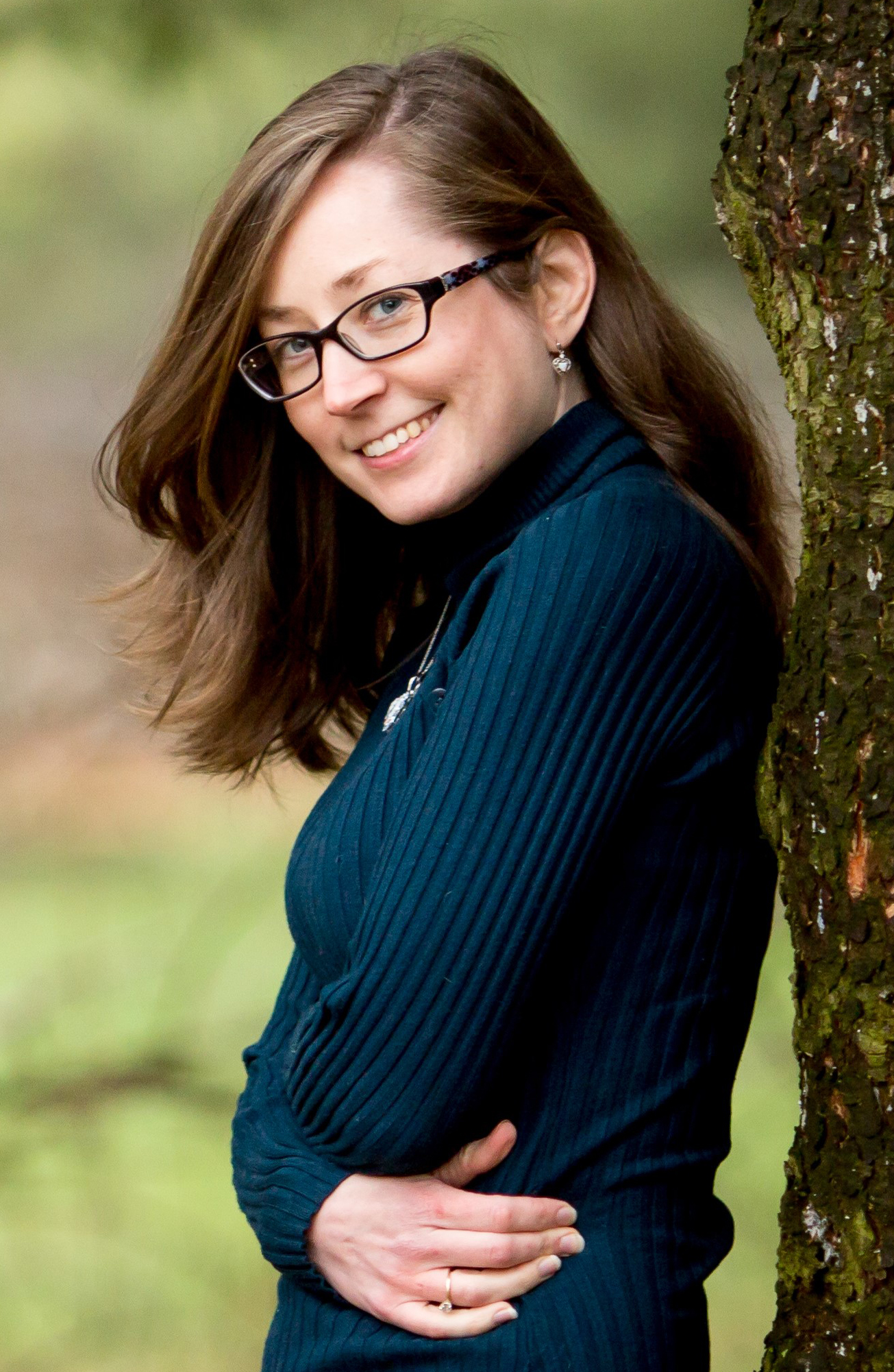
The Lost Melody is about a concert pianist who sees the entire world in terms of
music. She sees the people around her, the good and bad circumstances of her
life, even the atmosphere of a place, as a song with all its unique traits. She
enters Hurstwell Pauper Lunatic Asylum as an aid to find a mysterious ward she
never knew about—and who the asylum claims was never a patient there. Because
her father has paid for this woman’s keep for many years, and because Vivienne
herself recognizes the woman’s portrait, she cannot keep from searching out the
truth. She’s seen this woman and heard the haunting lost melody she plays on
the piano, yet no one seems to know her or what became of her. She discovers
more than she ever imagined she would, pairing her skill in music with a place
deeply in need of healing, and we get to see through Vivienne what impact music
has on people’s minds and bodies—and what impact light has in darkness.
What inspired the story of a woman searching for a mysteriously
missing patient? I had a dream once—that’s how so many story
ideas start—that I woke up in some prison cell for speaking out about God. It
was terrifying and emboldening, and I felt I had a mission, even within these
odd circumstances. In the morning, I wrote out the details of what I’d
experienced, then I started asking “what if?” I made it a story idea, and
thought about why someone might find themselves trapped in an asylum. I tossed
out the overdone ideas and thought of more. What put her there? What happens
next? Then what? And since this came from a dream, I thought it would be a fun
twist to have the mysterious character the heroine searches for be from a dream
too. A pianist who played a distinctive song in the middle of the night, and
only the heroine heard it. I had no idea where I was going with the idea, but
it was an interesting place to start!
The Lost Melody is set in the
Victorian era. What drew you to this time period? Of all the books I’ve read, some of my favorites were written during
the Victorian era. I feel at home in that slice of history, and I just love the
nuances and climate of the time. Things were vastly different then, especially
for the poor and for women, but humanity remains the same. There are so many
insights into our life here and now through the lens of Victorian England.
Your character spends a great deal of time at an asylum. What type of
research was required to accurately portray this time period and the location? I read a lot of nonfiction material concerning asylums, including
myth-busting statistics and evidence. I also read journalist Nelly Bly’s
account of her time in a “mad house,” as she called it, and everything she
experienced. Her story took place in New York, so I mostly used her impressions
and thoughts rather than the historical details that wouldn’t have necessarily
matched British asylums, but it was incredibly helpful in setting the tone in
my head.
What I found most helpful were the journals written by various asylum
inmates, mostly men, in Victorian England. Those accounts were raw and
heartbreaking, especially when I recognized everyday conditions in the patients
described in the pages. There were also records of items patients left behind
as well as early photographs of their faces, and that added a human element to
my research. I couldn’t set these stories aside. I couldn’t forget about the
people and their lives. And through all this research, I found a great deal of
hope and beauty.
Your main
character, Vivienne, is a concert pianist. What compelled you to write about a
musically talented character? When God invited me into a very
dark-sounding premise, this asylum setting, I wanted to contrast it with
something intensely beautiful. One of the most beautiful things I could think
of within that time period was music—especially piano music. Whenever I write,
or even when I’m homeschooling my small children, piano music permeates the atmosphere
and somehow grounds us all. It’s calming but also full of life, and that’s
exactly what I wanted to put into this story that could otherwise be quite
dreary. The music ended up becoming a huge component of the story, and adding
so much light and hope and fascinating historical elements that I can’t wait to
share with readers. The music portion of my research and my preparation was a
real delight to my music-loving heart.

Honestly, I never
think the story will work itself out, or that a resolution will be possible,
until it happens and it’s there. A writing friend once told me that our brain
hates an unfinished story, and that’s how this one especially went for me—I
couldn’t get it out of my head until I’d untangled every last twist and saw
everything clearly. Then, of course, there’s the matter of going back through
the whole thing and making sure all the details add up and actually point to
the right conclusion!
Do you identify
with Vivienne in any way?
Absolutely. I’ve
played piano for as long as I can remember, and the way music gets under her
skin—in a good way—is somewhat from my own life. I’m not a performer, but I
absolutely love to play and listen to music. Beyond that, I felt her spiritual
struggle heavily. The idea of having a strong purpose in life, then being
derailed, finding yourself trapped in circumstances that were nowhere near what
you’d planned . . . and realizing the interruption was as important
as the previous mission you were on. Perhaps more so. I’ve been in some long
seasons I didn’t understand, didn’t like, and after crying out to God with all
my questions and probably more than a few complaints, I realized each time what
freedom I still had within the prison of those circumstances.
What do you hope
the reader takes away from The Lost Melody? A sense of freedom
within the constraints of circumstances. At some point we all find ourselves
mired in a place we don’t want to be, trapped by someone else’s choices or by
unforeseen events. We fight it, complain about it, then something happens and
we settle into the season and maybe even realize this interruption was the
point all along. That our purpose and mission are found right in the midst of
the place we never wanted to be. Or at the very least, that we can have a great
deal of freedom within that difficulty. What freedom is available to God’s
people, especially within their heart, no matter what’s going on around them.
What do you love
about writing historical fiction? I love the characters! I always start with
them. Then I look at what’s going on in the world around them and how that
might shape who they are, their motivations, their heart questions. Humanity
remains largely the same over time, broken but beautiful, but there’s something
irresistible about stepping out of your own world and visiting another,
spending time with the people there and seeing humans from their
perspective—then seeing the similarities to ourselves in modern culture.
Where can our audience go to connect with you? My newsletter is where I share everything first, and you can connect
with that on my website: jdpstories.com. I’m also on Facebook and Instagram as
Joanna Davidson Politano. I also create Pinterest boards to help readers
visualize my stories.
Thank you, Joanna,
for sharing your novel on my blog. I have a lot of readers who love historical
novels.
Readers, here’s a
link to the book.
Leave a comment
for a chance to win a free copy of the book. You must follow these
instructions to be in the drawing. Please tell us where you live, at least
the state or territory or country if outside North America. (Comments
containing links may be subject to removal by blog owner.)
Void where
prohibited; the odds of winning depend on the number of entrants. Entering the
giveaway is considered a confirmation of eligibility on behalf of the enterer
in accord with these rules and any pertaining local/federal/international laws.
The only
notification you’ll receive is the winner post on this blog. So be sure to
check back a week from Saturday to see if you won. You will have 2 weeks from
the posting of the winners to claim your book.
If you’re reading this on Goodreads, Feedblitz, Facebook, Twitter, Linkedin, or Amazon, please come to the blog to leave your comment if you want to be included in the drawing. Here’s a link: Http://lenanelsondooley.blogspot.com